




















Using Business Objects in the Report
Our sample projects and report templates can help you learn the basics of working with our products.Reports can be bound directly to your application's business objects — any
Registering the objects. Register the collection under a name, load a template built against it, and render:
How it works. The report consumes the very domain classes your application already uses; switching between
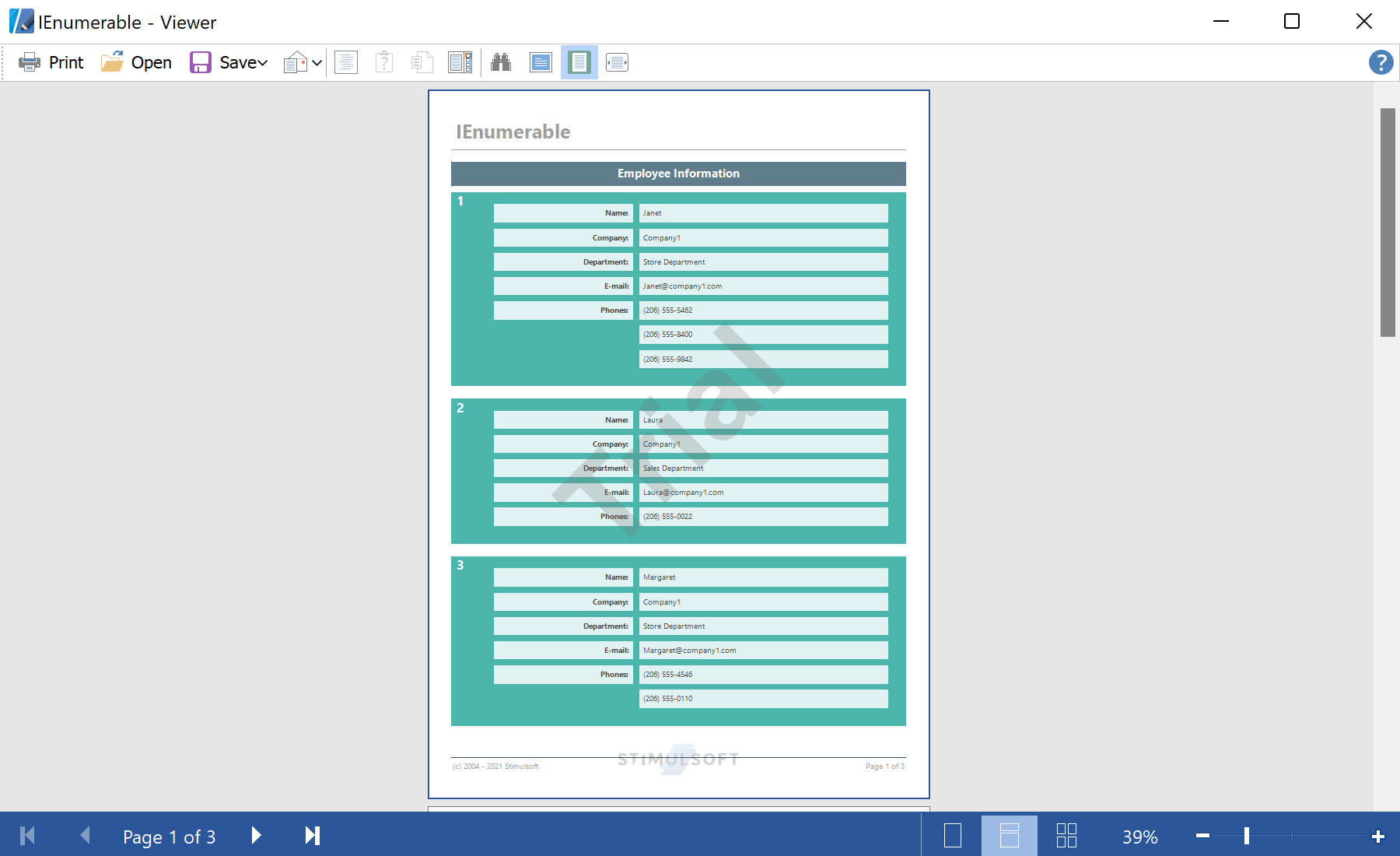
In the screenshot below you can see the result of the sample code:
IEnumerable or ITypedList collection — without converting them to datasets first.Registering the objects. Register the collection under a name, load a template built against it, and render:
var report = new StiReport();
report.RegData("EmployeeIEnumerable", CreateBusinessObjectsIEnumerable.GetEmployees());
report.Load("BusinessObjects_IEnumerable.mrt");
report.Show();
RegData(name, object)— exposes a business-object collection to the report under the given data-source name.- An
ITypedListsource additionally advertises its columns, so the dictionary can be built without reflection.
How it works. The report consumes the very domain classes your application already uses; switching between
IEnumerable and ITypedList only changes how column metadata is discovered.In the screenshot below you can see the result of the sample code: