




















Integrating the Dashboard Designer into an Application
Our sample projects and report templates can help you learn the basics of working with our products.This example is outdated, you can check out the many other new examples in this category.This example shows how to integrate the dashboard designer into a Vue.js 3 application. First of all, load scripts:
Then, create the dashboard designer with specified options:
Next, create a new dashboard instance and load dashboard:
After that, render the designer to selected element:
Finally, show the designer:
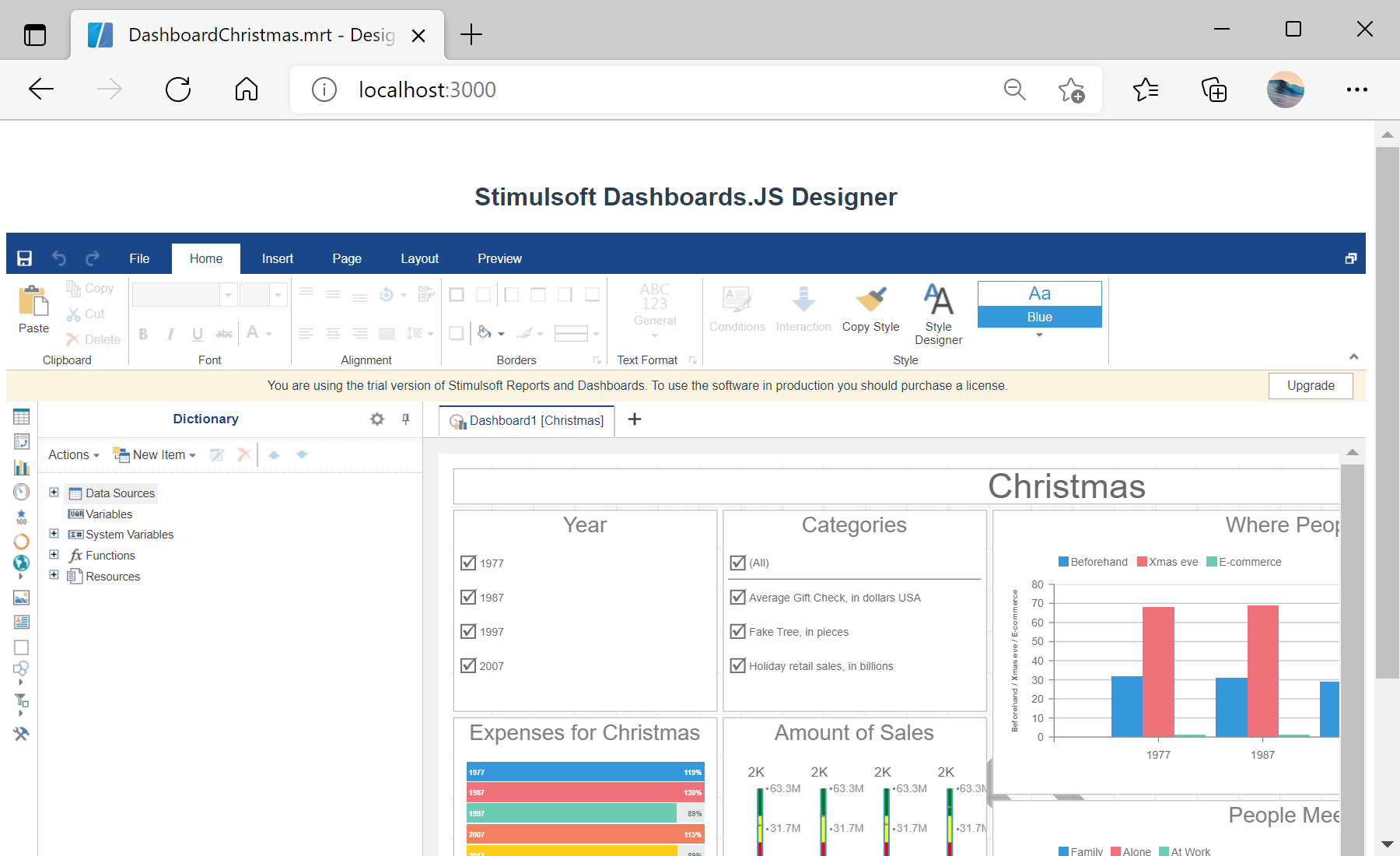
In the screenshot below you can see the result of the sample code:
import { onMounted } from "vue";
import { Stimulsoft } from "stimulsoft-dashboards-js/Scripts/stimulsoft.blockly.editor";
import 'stimulsoft-dashboards-js/Css/stimulsoft.designer.office2013.whiteblue.css';
import 'stimulsoft-dashboards-js/Css/stimulsoft.viewer.office2013.whiteblue.css';
Then, create the dashboard designer with specified options:
onMounted(() => {
	console.log('Loading Designer view');

	console.log('Set full screen mode for the designer');
	var options = new Stimulsoft.Designer.StiDesignerOptions();
	options.appearance.fullScreenMode = false;

	console.log('Create the dashboard designer with specified options');
	var designer = new Stimulsoft.Designer.StiDesigner(options, 'StiDesigner', false);


...
Next, create a new dashboard instance and load dashboard:
...

	console.log('Create a new dashboard instance');
	var report = Stimulsoft.Report.StiReport.createNewDashboard();

	console.log('Load dashboard from url');
	report.loadFile('dashboard/DashboardChristmas.mrt');

	console.log('Edit dashboard template in the designer');
	designer.report = report;

...
After that, render the designer to selected element:
...

	console.log('Rendering the designer to selected element');
	designer.renderHtml('designer');

	console.log('Loading completed successfully!');
});
Finally, show the designer:
<div id="designer"></div>In the screenshot below you can see the result of the sample code: