

















Cloud
Cloud-Dienstleistung für schnelle und effektive Analyse und Visualisierung von Daten für Ihr Business ohne eigene Applikationen zu erstellen oder zu programmieren.
<head> block of the HTML page:
<?php
require_once 'vendor/autoload.php';
?>

...

<?php
$js = new \Stimulsoft\StiJavaScript(\Stimulsoft\StiComponentType::Designer);
$js->renderHtml();
?><script> block, create and configure an event handler:
<script type="text/javascript">
<?php
$handler = new \Stimulsoft\StiHandler();
$handler->renderHtml();$options = new \Stimulsoft\Designer\StiDesignerOptions();
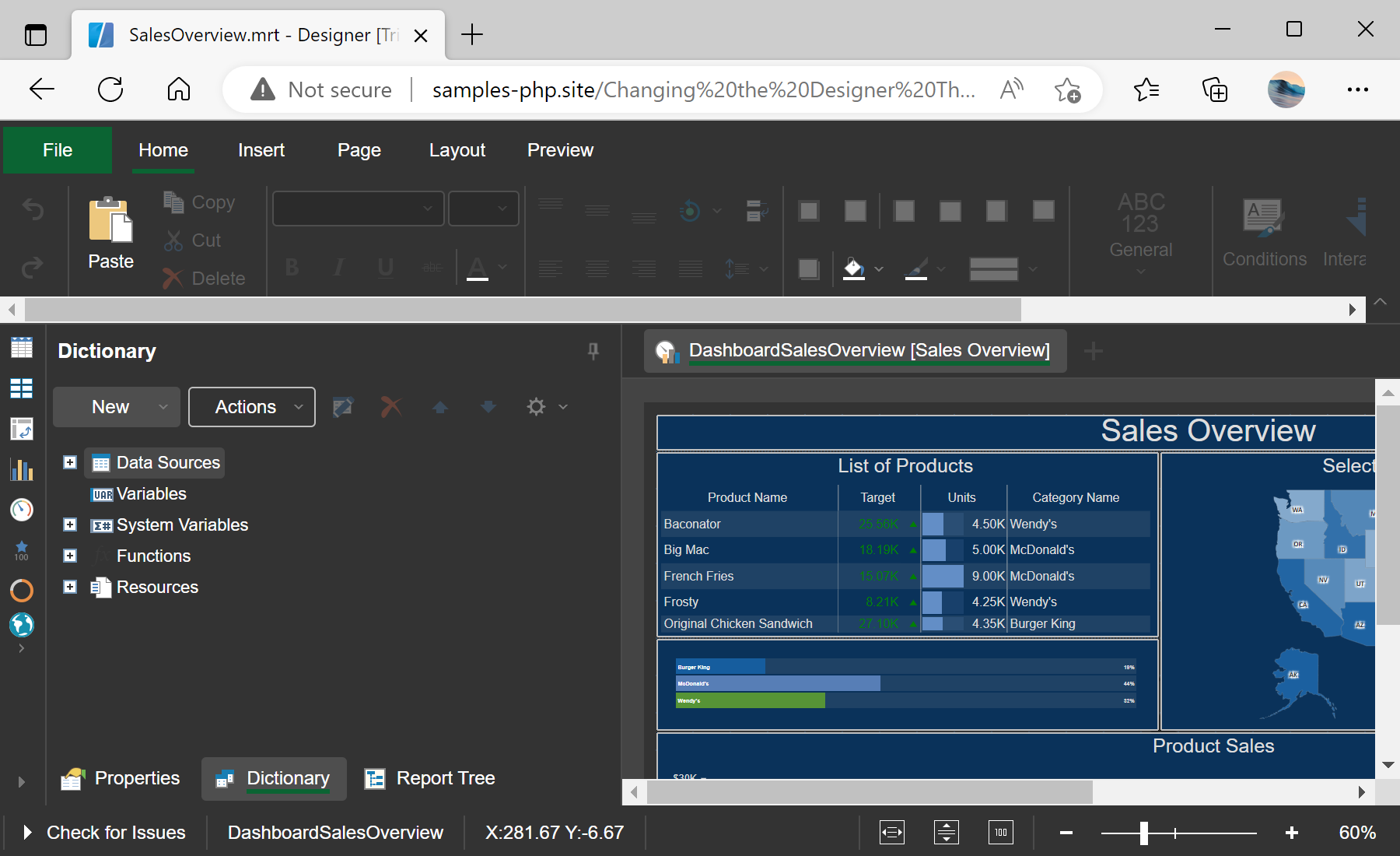
$options->appearance->fullScreenMode = true;
$options->appearance->theme = \Stimulsoft\Designer\StiDesignerTheme::Office2022BlackGreen;$designer = new \Stimulsoft\Designer\StiDesigner($options);loadFile() method does not load the report object on the server side, it only generates the necessary JavaScript code. The dashboard will be loaded into a JavaScript object on the client side:
$report = new \Stimulsoft\Report\StiReport();
$report->loadFile('reports/Christmas.mrt');
$designer->report = $report;
?></script> block. The rendered code will be placed inside the specified HTML element:
function onLoad() {
	<?php
	$designer->renderHtml('designerContent');
	?>
}
</script>

...

<body onload="onLoad();">
<div id="designerContent"></div>
</body>