

















Cloud
Cloud-Dienstleistung für schnelle und effektive Analyse und Visualisierung von Daten für Ihr Business ohne eigene Applikationen zu erstellen oder zu programmieren.
import { Stimulsoft } from 'stimulsoft-dashboards-js/Scripts/stimulsoft.blockly'@Component({
selector: 'app-root',
template: `<div>
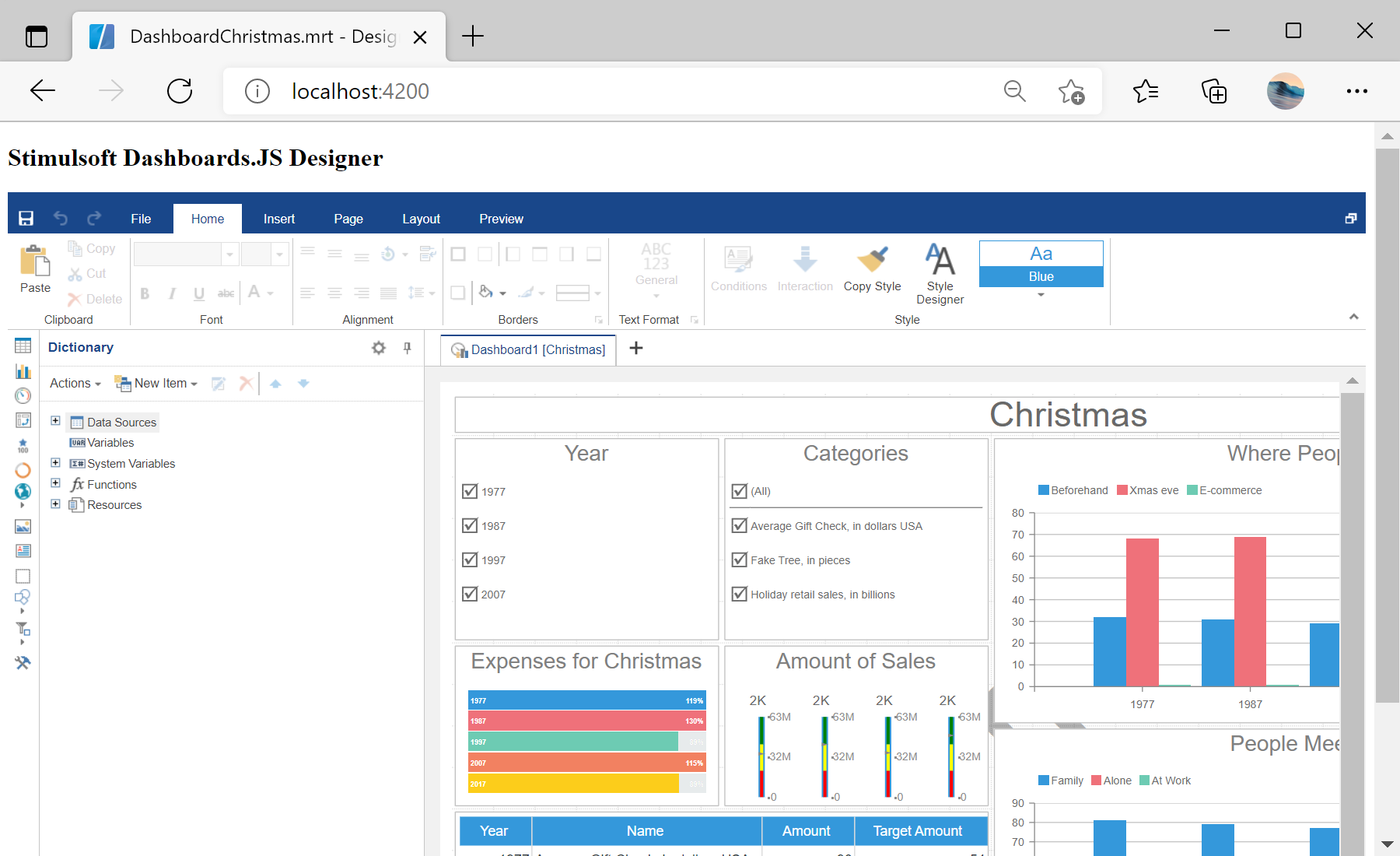
<h2>Stimulsoft Dashboards.JS Designer</h2>
<div id="designer"></div>
</div>`
})
...AppComponent class with the dashboard designer integration:
...

export class AppComponent {
	options: any;
	designer: any;

	ngOnInit() {
		console.log('Loading Designer view');

   		console.log('Set full screen mode for the designer');
    	this.options = new Stimulsoft.Designer.StiDesignerOptions();
    	this.options.appearance.fullScreenMode = false;

   		console.log('Create the dashboard designer with specified options');
    	this.designer = new Stimulsoft.Designer.StiDesigner(this.options, 'StiDesigner', false);

    	console.log('Edit dashboard template in the designer');
    	this.designer.report = Stimulsoft.Report.StiReport.createNewDashboard();

    	console.log('Load dashboard from url');
    	this.designer.report.loadFile('/dashboard/DashboardChristmas.mrt');

    	console.log('Rendering the designer to selected element');
    	this.designer.renderHtml('designer');

   		console.log('Loading completed successfully!');
	}

...constructor():
...

	constructor() {
	}
}